

Most owners look up OSHA exposure limits and conclude they are compliant. The rule that governs your build-out is in the mechanical code — 50 CFM per station, and the inlet within 12 inches of where the chemicals go.
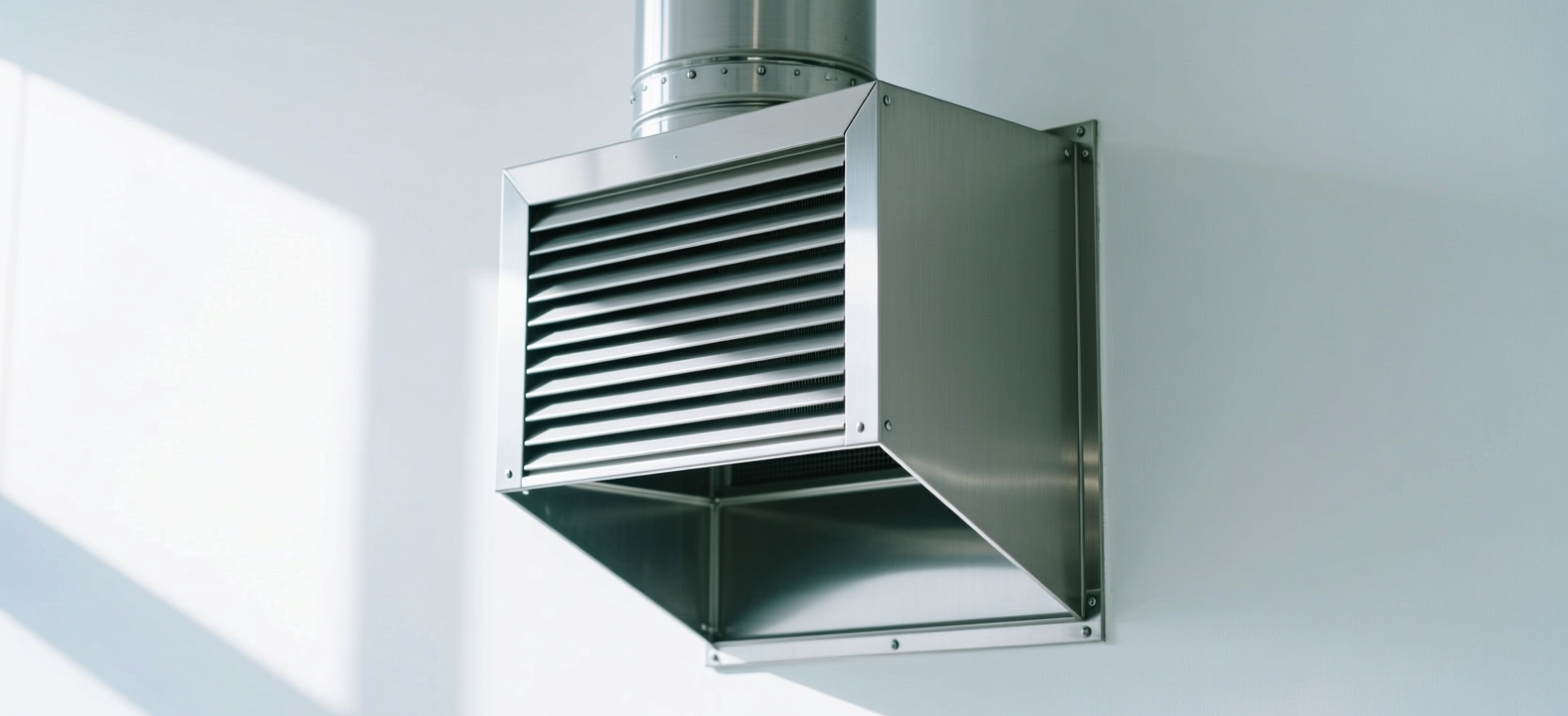
Ask ten salon owners what their ventilation obligation is and you will get ten answers, most of them some version of "we open the door and run the fans." That answer was never right, and in a growing number of states it is now demonstrably not enough.
The confusion is understandable, because the rule that matters is usually not the one owners go looking for.
Owners often start with OSHA, find the permissible exposure limits, and conclude they are fine. The problem is that OSHA's exposure limits were largely written for industrial settings — steel mills, chemical plants — and many have not been meaningfully updated in decades. A nail salon can sit comfortably inside those limits and still be an unpleasant, headache-inducing place to work eight hours a day.
OSHA is clear about what the hazards are. Its nail salon guidance calls out the chemicals the industry has come to know as the "toxic trio":
Knowing the hazard is not the same as having a standard to build to. For that you have to look at the building code.
The International Mechanical Code — adopted in some form by most states — sets specific requirements for nail salons. Since the 2015 edition, the relevant ones are:
That third point rules out a category of equipment that gets sold to salons as a compliance solution: the recirculating tabletop filter unit. Those units can improve comfort at the station, and there is nothing wrong with owning one. But a device that filters air and returns it to the same room is not source-capture exhaust, and it does not meet the code requirement on its own.
New York offers the clearest illustration that these deadlines are real and do pass.
Salons licensed on or after 3 October 2016 had to meet the ventilation requirements from the day they opened. Salons that already held a licence before that date were given a transition period — which ended on . That date is behind us. A salon operating in New York on pre-2016 equipment is not in a grace period; it is out of compliance.

The nail industry's exemption from AB5 expired on 1 January 2025. If you own a California salon and still have technicians on 1099s, you are accruing risk rather than avoiding it — here is what the employee model actually costs.
Other states have set their own requirements, and they are not identical. This is one of the areas where "what my cousin's salon in another state does" is actively misleading.
You do not need a consultant to find out whether you have a problem. You need a tape measure and an afternoon.
The uncomfortable part of this list is that a salon can fail step 2 while passing steps 1 and 3 — plenty of expensive systems move enough air but capture it in the wrong place. Volume without proximity does not do the job, because it is not pulling the vapour away from the person breathing it.
Sources: OSHA — nail salon chemical hazards · ICC on nail salon exhaust requirements in the International Codes · New York Department of State — ventilation regulations
Requirements vary by state and by the edition of the mechanical code your jurisdiction has adopted. Confirm the specifics with your state board and local building department before you commit to a build-out.